
Five Seats or Seven: How the 2027 Mercedes-Benz GLB’s Optional Third Row Measures Up
September 23 2026,
Choosing between five and seven seats sounds simple, until you picture your own weekend. If you’re cross-shopping the 2027 Mercedes-Benz GLB in Quebec, the third row is the one option that changes almost everything else about how the SUV works day to day.
This isn’t a question of more space being automatically better. It’s a question of which layout actually matches how your household uses a vehicle.
Why the 2027 GLB Deserves a Look
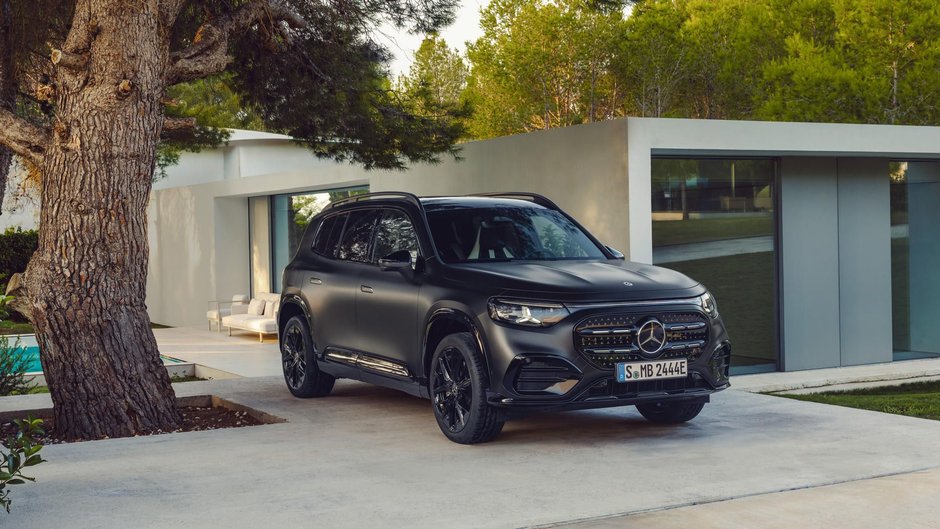
The GLB arrives as a compact SUV built around flexibility rather than a single fixed cabin layout. Standard seating is for five, with the seven-seat configuration offered as an option that adds two individual seats in the third row.
The wheelbase measures 2,889 mm, longer than the previous generation, and that extra length shows up directly in second-row legroom. Overall dimensions run 4,732 mm long, 1,861 mm wide, and 1,687 mm tall, giving the GLB a taller, boxier shape than a typical crossover, which is part of why the interior feels roomier than the exterior dimensions suggest.
Under the skin, the GLB 250+ with EQ Technology pairs a 268-hp motor with 247 lb-ft of torque and 542 km of electric range, riding on rear-wheel drive. The GLB 350 4MATIC with EQ Technology adds all-wheel drive, 349 hp, 380 lb-ft, and 614 km of range. Both use an 85-kWh battery on an 800-volt architecture, and both can add roughly 260 km of range with a 10-minute DC fast charge.
The Third Row: What It’s Really For
The two individual third-row seats are designed for occupants up to 5’5" tall. That’s a real number worth sitting with: this row suits kids, pre-teens, and smaller adults on shorter trips, not two adults heading to a cottage for a week.
Third-row headroom measures 882 mm, noticeably tighter than the 1,026 mm available in the second row. Legroom back there isn’t published, which tells you something on its own: this is backup seating for occasional use, not a third full-time zone.
Getting in and out is easier than the numbers alone suggest. The Easy Entry function has a longer adjustment range, and the rear door openings are enlarged, so loading a child into the third row doesn’t require the usual contortion. That access detail matters more than raw legroom if you’re only using the third row for school runs or an extra passenger on weekends.
When it’s not needed, the third row folds flat into the load floor, so the seats disappear rather than sitting there eating into cargo space.
Strengths That Matter Beyond the Seat Count
- Second-row flexibility: an available sliding second row moves 140 mm and reclines in stages, letting you choose passenger comfort or up to 140 L of extra cargo space on five-seat models. It’s included automatically with the third-row option.
- A frunk that actually holds something: the 127 L front trunk is the largest in the model family, adding storage that doesn’t compete with passenger space at all.
- Panoramic roof as standard: the glass roof and SUV roofline combine to lift headroom in the front and second row, which is part of why the cabin feels larger than the footprint implies.
- MBUX Superscreen and a 16-speaker Burmester system: the available 14-inch central and passenger displays, paired with a 10.25-inch driver cluster, keep road-trip navigation and entertainment on the dash instead of a phone mount.
Cargo and Cabin Numbers, Side by Side

|
Measurement |
5-Seat GLB |
7-Seat GLB |
|
Cargo behind rear seats |
540 L |
480 L |
|
Cargo, seats folded |
1,715 L |
1,605 L |
|
Second-row headroom |
1,026 mm |
1,016 mm |
|
Second-row legroom |
1,008 mm |
939 mm |
|
Third-row headroom |
- |
882 mm |
The seven-seat layout costs you 60 L of trunk space and about 70 mm of second-row legroom, the trade for having two extra seats on standby. That’s a fair exchange if those seats get used regularly. It’s a smaller one if they mostly stay folded.
Who The Third Row Actually Fits
Households with school-age kids who occasionally need to fit a friend, grandparent, or neighbour’s child in for a ride are the clearest fit. The seats handle that job well, and the improved door access makes loading younger passengers less of a chore than in a cramped third row elsewhere in the segment.
Families who need two adults in the back seat regularly, or who prioritize maximum cargo room for gear, ski equipment, or stroller storage, are better served by the five-seat layout. The 540 L trunk and the sliding second row’s 140 L cargo boost give you room to work with, without carrying two seats you rarely fold out.
Weekend cottage-country drivers who occasionally shuttle extra guests but mostly haul luggage sit in between, and for that group the answer often comes down to how often “occasionally” really happens.
Deciding Between Five and Seven Seats
The honest way to frame this decision: the third row is best treated as backup seating, not a permanent family zone. It earns its place when you can point to specific, recurring situations, an extra kid on the school run, a visiting relative, a weekend group outing, where two more seats solve a real problem.
If those situations don’t come to mind easily, the five-seat GLB keeps its cargo advantage intact and its second row roomier, without a third row folding away unused most weeks.
Either way, the improved second-row comfort, the standard panoramic roof, and the available MBUX Superscreen mean the core cabin experience holds up regardless of which layout you pick. The seat count decision doesn’t change how the rest of the GLB feels to live with.
Finding the Right GLB Configuration in Quebec
The 2027 GLB’s optional third row turns a compact SUV into an occasional seven-seater, without asking five-seat buyers to give up cargo space or second-row comfort to get there. The right layout comes down to how often extra seats will actually get used.
Visit Mercedes-Benz Blainville in Mirabel to sit in both the five- and seven-seat GLB configurations and see which layout matches your family’s week.