
Does the 2026 Mercedes-Benz CLA Lose Much Range in Deep Winter Cold?
September 21 2026,
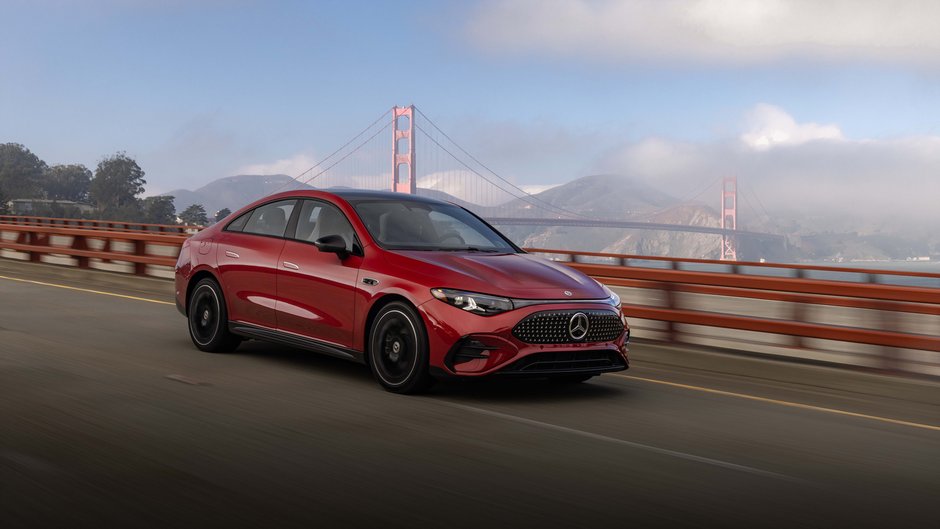
A Quebec winter morning is not gentle on any electric vehicle. Cold soaks the battery, the cabin needs heat before you even move, and every commute starts with a small question mark over how much range you’ll actually see. The 2026 CLA was engineered with exactly this scenario in mind.
This piece breaks down what actually happens to range in the cold, what the CLA does about it, and which kind of driver will barely notice the difference.
What Winter-Range Protection Means on the CLA
Cold weather pulls energy from an EV in two ways: the battery chemistry slows down below its ideal operating temperature, and the cabin needs active heating that has to come from somewhere. On a gas car, that heat is a free byproduct of the engine. On an EV, it competes directly with the battery for energy.
The CLA answers this with an air-to-air heat pump, standard on the electric lineup, paired with an intelligent thermal management system that actively manages battery temperature rather than reacting after the fact.
How the Heat Pump and Battery Preconditioning Work
The heat pump is a multi-source design. It pulls waste heat from the electric drive unit, the battery, and the ambient air, all at once, instead of relying on a resistive heater that burns straight battery energy. Mercedes-Benz states it needs roughly a third of the energy of a comparable auxiliary heater to deliver the same cabin output.
Battery preconditioning works alongside it. When Navigation with Electric Intelligence is active and a fast-charge stop is planned, the battery is warmed during the drive so it reaches the ideal temperature range before you plug in. That matters in the cold: a battery that isn’t preheated charges slower, full stop.
The CLA also recuperates energy through braking, with up to 200 kW of regenerative power and four selectable recuperation levels, including a setting tuned for icy surfaces where the system can recuperate even during ABS braking. Every bit of that recovered energy is energy you didn’t have to spend heating the cabin instead.
The electric CLA lineup also runs on an 800-volt architecture, the same core technology introduced on the VISION EQXX concept. At a DC fast charger rated up to 320 kW, the CLA 250+ can add 285 to 325 km of WLTP range in about ten minutes, and the CLA 350 4MATIC adds 275 to 315 km in the same window.
Cold batteries fast-charge more slowly regardless of the car, which is exactly why the preconditioning step matters most in January, not July.
CLA 250+ vs. CLA 350 4MATIC: Two Different Winter Setups

|
Spec |
CLA 250+ |
CLA 350 4MATIC |
|
Drivetrain |
RWD |
AWD (dual motor) |
|
Output |
268 hp / 247 lb-ft |
349 hp / 380 lb-ft |
|
WLTP range |
up to 792 km |
up to 771 km |
|
0-60 mph |
6.6 s (est.) |
4.8 s (est.) |
|
DC fast charge (10 min) |
285-325 km |
275-315 km |
The 250+ is rear-wheel drive and posts the longer WLTP range figure of the two. The 350 4MATIC trades a modest amount of range for a second motor on the front axle, which only engages when traction or power is actually needed, thanks to its Disconnect Unit. That means the AWD system isn’t drawing power constantly; it steps in for launches, low grip, and hard acceleration, then disengages to protect efficiency.
For Quebec’s icy on-ramps and unplowed side streets, that traction reserve is worth thinking about even though it costs a small amount of quoted range on paper. Neither figure should be read as a guaranteed cold-weather number: WLTP ratings reflect a controlled test cycle, and actual winter range on either version will run lower once cabin heating and cold-battery losses are factored in.
Why This Actually Matters for a Quebec Commute
Short trips are the real test of any EV’s winter behaviour, more than long highway runs. Every start-up draws energy to bring the cabin and battery up to a usable temperature, so a string of 10-minute errands adds up to more preconditioning cycles than one long drive covering the same distance.
Commuters who precondition the cabin while still plugged in, using scheduled climate features, avoid pulling that warm-up energy from the battery itself. It’s a small habit that changes how much range disappears before you’ve gone a single kilometre.
Driver-assistance and lighting features round out winter confidence beyond the battery story. Active Distance Assist DISTRONIC, Active Lane Keeping Assist, and MULTIBEAM LED headlights are available on the CLA, all useful when visibility drops and roads stay slick for weeks at a time.
Which Quebec Drivers Will Notice the Cold the Least
Urban and suburban commuters doing daily round trips well under the WLTP-rated range, with regular access to home or workplace charging, are the least likely to feel winter range loss in a meaningful way. The buffer built into an 85 kWh battery and a rated range north of 770 km on both versions leaves plenty of room even after cold-weather losses.
Drivers who lean on frequent long-distance winter road trips, where fast-charging stops are unavoidable, will notice the difference more directly: colder ambient temperatures and a colder battery mean each charging stop takes a bit longer than it would in June. This is where the preconditioning routine, plotting a fast-charger through the navigation system so the battery warms ahead of arrival, earns its keep.
For most daily Quebec driving patterns, though, short commutes, home charging overnight, and occasional errands, the CLA’s winter behaviour lines up closely with how it performs the rest of the year.
Talk Winter Readiness Before You Decide
The 2026 CLA pairs an 85 kWh battery, an 800-volt platform, and a standard heat pump to manage the two biggest cold-weather range factors: cabin heat and battery temperature. The CLA 250+ and CLA 350 4MATIC each approach that job with a different drivetrain and range trade-off.
Visit Mercedes-Benz Blainville in Mirabel to talk through your typical winter routes and find out which CLA setup, RWD or 4MATIC, fits the way you actually drive through a Quebec winter.