
4MATIC All-Wheel Drive Explained for the 2026 Mercedes-Benz GLA 250
September 18 2026,
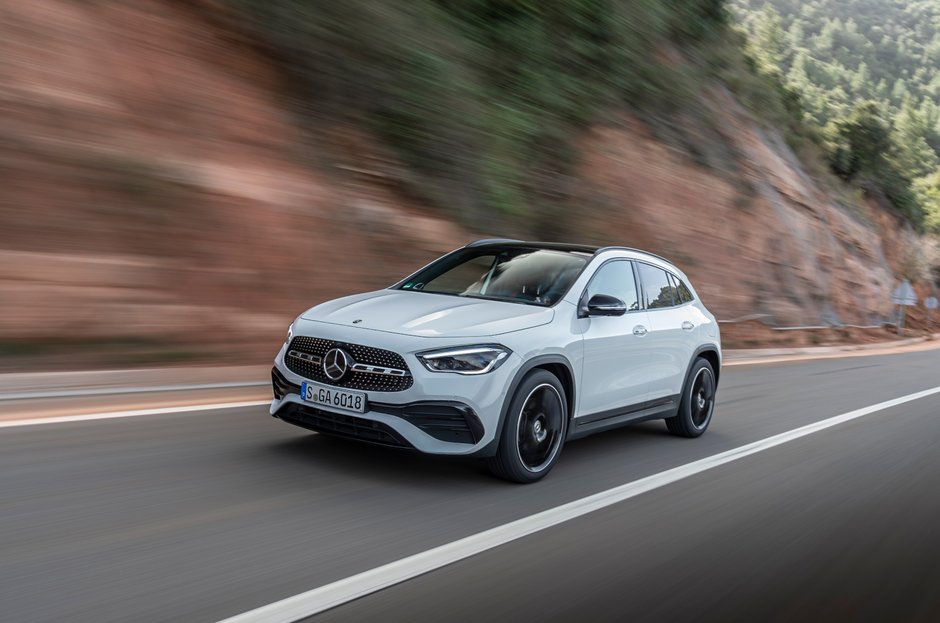
A compact luxury SUV spends most of its life on ordinary roads: highway stretches, wet parking lots, gravel shoulders, patchy pavement after a repaving crew moves through. The 2026 GLA 250 4MATIC is built around handling that variety without the driver having to think about it.
If you’re comparing all-wheel-drive systems while shopping in Quebec, here’s what 4MATIC actually does, how it works, and where it earns its keep.
What 4MATIC Is
4MATIC is the GLA 250’s standard all-wheel-drive system. It works alongside the 4-wheel Electronic Traction System (4-ETS), which handles wheel-slip detection and response. Together, they form the drivetrain’s traction backbone rather than two separate add-ons.
This is a road-oriented system, not an off-road package. The GLA 250 pairs 4MATIC with an 18-inch wheel and 235/55R18 all-season tire setup, and the goal is stability on the roads most owners actually drive, not rock crawling or deep-mud work.
How It Works
4MATIC uses variable torque distribution between the front and rear axles instead of a fixed split. Under normal conditions, torque leans toward the front axle; when conditions change, the system can send up to 50 percent of the engine’s torque output to the rear wheels.
The 4-ETS layer watches each wheel individually. The moment it detects the first sign of slip, it responds by directing torque toward whichever wheel still has grip, even if that’s just one wheel out of four. The two systems work as a package: 4MATIC moves torque between axles, and 4-ETS fine-tunes it wheel by wheel.
The GLA 250 also includes Downhill Speed Regulation, which can hold a preset descent speed automatically. It’s a supporting feature for uneven grades, part of the broader traction story rather than a separate off-road claim.
|
Drivetrain component |
Function |
|
4MATIC |
Variable torque split, up to 50% to rear axle |
|
4-ETS |
Per-wheel slip detection and torque response |
|
Downhill Speed Regulation |
Automatic descent-speed control on grades |
Why It Matters in Real Driving
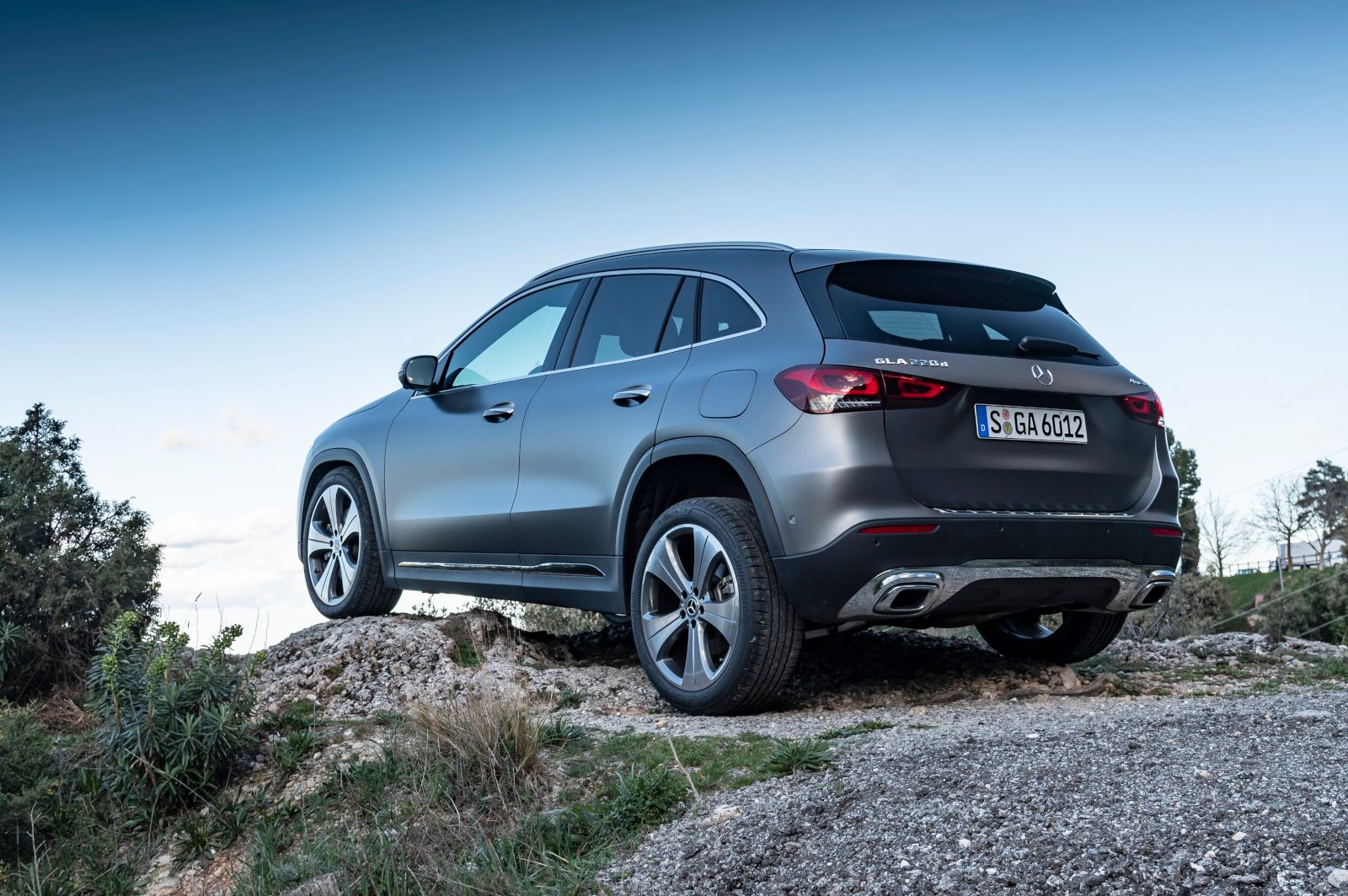
Most of the situations where this system earns its place aren’t dramatic. A driveway with an awkward angle after rain, a patched section of road with uneven grip from lane to lane, a wet on-ramp merge: these are the moments where variable torque distribution changes how the SUV plants itself.
The GLA 250 pairs 4MATIC with a 221-hp, 2.0 L turbocharged inline-four and a mild-hybrid setup, running through an 8-speed dual-clutch automatic. The mild-hybrid system can add up to 13 hp and 111 lb-ft of torque on demand, and the drivetrain is tuned as one unit: engine, transmission, and 4MATIC responding together rather than as isolated parts.
Quebec’s mixed road surfaces, seasonal freeze-thaw patching, and stretches of gravel shoulder outside urban cores all fall inside the kind of “changing conditions” 4MATIC is built to respond to. That includes wet fall driving now and winter-adjacent conditions when the seasons turn, without the setup being a specialized winter or off-road system.
Who Benefits Most
A driver doing mostly dry, well-maintained city streets may not notice 4MATIC often. A commuter or suburban driver covering highway on-ramps, unplowed side streets, gravel driveways, and mixed pavement day to day will notice it more, because those are exactly the scenarios where torque needs to move between axles.
Front-wheel-drive setups rely on a single axle for both power and steering grip; when that axle loses traction, there’s no second axle to lean on. 4MATIC’s variable split gives the GLA 250 a second source of grip to draw from, which matters most for drivers who can’t predict the surface they’ll hit next: school runs on residential streets, weekend trips outside the city, or a four-season commute that covers highway and back roads in the same week.
Buyers whose driving is almost entirely urban and paved may weigh 4MATIC differently than someone splitting time between city streets and rural roads. Either way, the system is standard on the GLA 250, so it isn’t a separate decision from choosing the trim itself.
Seeing the GLA 250 4MATIC in Mirabel
The 2026 GLA 250 4MATIC pairs a turbocharged 2.0 L engine and mild-hybrid support with a variable all-wheel-drive system built for changing road surfaces rather than off-road use. The drivetrain, transmission, and traction system work as one package.
Visit Mercedes-Benz Blainville in Mirabel to sit in the 2026 GLA 250 4MATIC and talk to a product specialist about traction feel, low-speed manoeuvring, and what the system offers for your specific driving routine.